4 Minute Read
SCRIPTURE
Galatians 4:8–9 (NASB95)
However at that time, when you did not know God, you were slaves to those which by nature are no gods. 9But now that you have come to know God, or rather to be known by God, how is it that you turn back again to the weak and worthless elemental things, to which you desire to be enslaved all over again?
COWBOY WISDOM
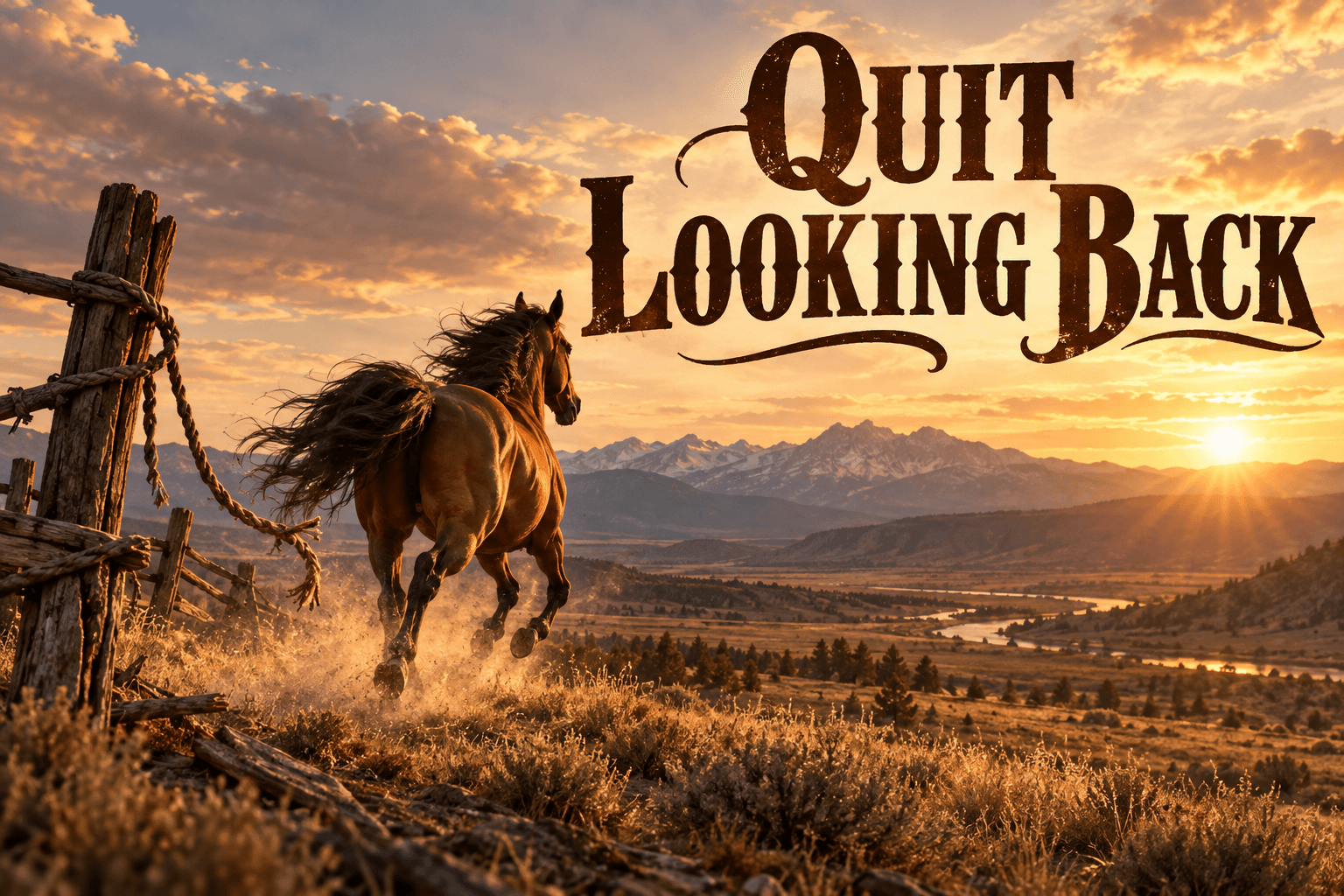
Hobble a horse at camp for enough nights in a row — a short rope between the front ankles so he can graze without wandering off — and he'll learn to get around just fine. He picks up a short, choppy, mincing little hop, just wide enough to move but never wide enough to fight the rope. It works. It keeps him close. But here's the part that catches most folks off guard: take those hobbles off for good, turn him loose in open country with nothing tying him down, and he'll often keep right on taking those same short, cramped little hops — for days, sometimes longer — like the rope's still there. It isn't. The limitation moved. It's not on his legs anymore. It's in his head.
That's the strange thing Paul can't get over with the Galatians. "At that time, when you did not know God, you were slaves to those which by nature are no gods." That was real bondage — a rope they didn't choose and couldn't slip. But "now that you have come to know God, or rather to be known by God," the rope is off. The hobbles are gone. And yet here they are, still taking the same short, cramped steps, still asking permission to move the way free people never have to. "How is it that you turn back again to the weak and worthless elemental things, to which you desire to be enslaved all over again?" Paul isn't just concerned — he's baffled. Why hop when you can run?
This is exactly the trap Paul names again later in this same letter: "It was for freedom that Christ set us free; therefore keep standing firm and do not be subject again to a yoke of slavery" (Galatians 5:1). Notice he doesn't just say the yoke is gone — he says stand firm, because a freed creature will drift right back into its old gait if nobody reminds it the rope's not there anymore. Old fears don't need old ropes to keep working. A mind that's spent years hobbled to guilt, to performance, to some old worthless god, can keep hopping along out of pure habit long after the actual chain came off at the cross.
So the question worth asking isn't whether the hobbles are still tied — Christ already answered that. The question is whether you're still moving like they are. A horse has to be asked, again and again, to actually stretch out his stride before he trusts that the rope's gone for good. Quit taking the old cramped steps. The ground in front of you is open.
QUESTIONS FOR REFLECTION
- What's the “hobbled gait” — an old fear, guilt, or limit — that your mind still obeys even though God has already set you free from it?
- Paul calls the old life “weak and worthless elemental things.” Why do you think something empty can still feel so pulling just because it's familiar?
- Galatians 5:1 says Christ set us free “for freedom” but then tells us to “stand firm.” Why do you think freedom still takes effort to actually live in?
- What's one practical step you can take this week to quit looking back at something God has already called you out of?
PRAYER FOCUS
Lord, You took the hobbles off a long time ago, and still my mind keeps taking the same old cramped steps out of habit. Forgive me for living smaller and more fearful than the freedom You actually bought me. Teach me to stand firm in what's already true, and give me the courage to finally stretch out my stride. In Jesus' name, Amen.